
What is macrofouling? How it affects marine vessels and ways to prevent it
Marine vessels operate in an environment where every surface below the waterline is under constant biological attack. Among many forms of biofouling, macrofouling stands out for its scale and visibility.
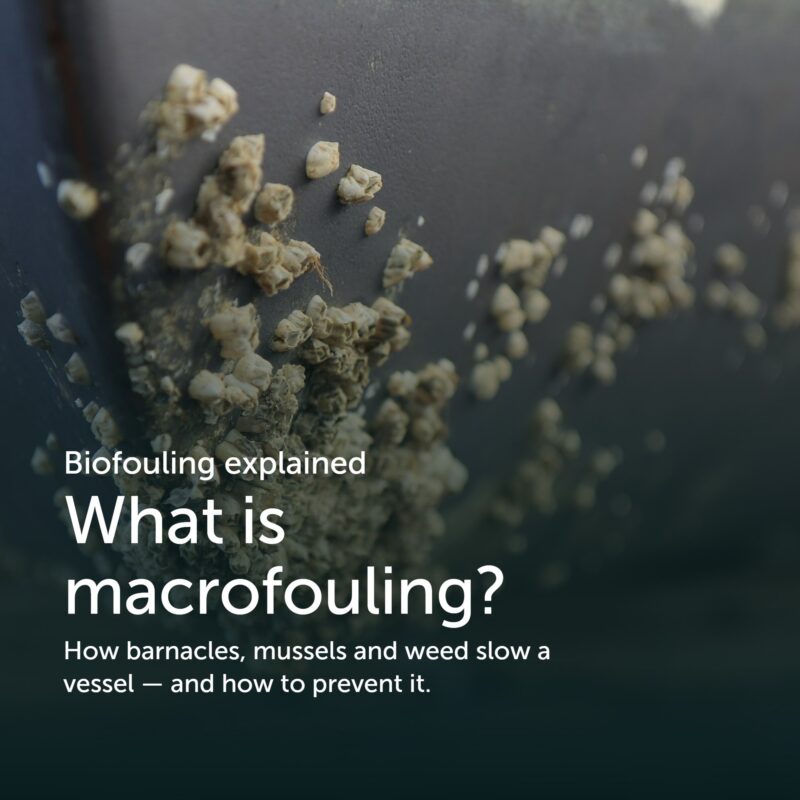
Barnacles cluster on propeller blades, mussels clog seawater intakes, and seaweed drapes across hull plates to ruin a vessel’s aesthetic. Even worse, they impact vessel performance and operating costs.
Blocked intakes can also disrupt critical cooling systems. On top of that, the modern regulatory guidelines require compliance with several standards. Unmanaged fouling can expose operators to biosecurity violations under frameworks like MEPC.378(80).
Below, we discuss the macrofouling definition along with its prevention strategies. We also identify common hotspots aboard vessels and discuss the organisms responsible.
In this article we discuss:
Understanding macrofouling
Macrofouling is the attachment and growth of large, visible biofouling organisms on submerged surfaces. The macrofouling definition includes barnacles, mussels, oysters, tubeworms, seaweed, and other multicellular species that can form dense colonies. These growths increase drag, clog seawater intakes, and disrupt vessel systems.
Microfouling vs. macrofouling
Microfouling occurs at the microscopic level. It begins with bacterial biofilms, which are thin microbial layers invisible to the naked eye. While they cause minimal drag, these films alter surface properties and create an ideal environment for macrofouling organisms to attach.
The distinction lies in the scale and operational effect of both types of biofouling. Microfouling is an early-stage biological layer. Meanwhile, macrofouling develops into visible colonies that increase hydrodynamic volume and fuel burn. The presence of macrofouling can reduce speed and raise maintenance costs.
Both stages are part of the same process, as microfouling sets the stage, while macrofouling delivers the performance hit. If you address the issue early, strategies like antifouling coatings can keep biofouling organisms from advancing into large-scale infestations.
Where and how it occurs
Macrofouling is driven by the settlement of larger biofouling organisms that grow in nutrient-rich waters. Some common offenders include barnacles, mussels, oysters, tunicates, sessile cnidarians, and several species of seaweed. These organisms establish themselves on surfaces already conditioned by marine biofilms, using the microbial layer as a foothold.
The ship hull and boat hull are primary targets since they have large submerged surfaces and are constantly exposed to seawater. After attaching, colonies increase surface roughness. It raises resistance through the water and pushes marine transport costs upward.
Propellers and rudders are also vulnerable to macrofouling. Here, fouling can cause vibration and affect maneuverability.
Seawater intakes and cooling system channels are another high-risk zone. Macrofouling in these areas can obstruct flow, impair heat exchange, and lead to unplanned maintenance or even system shutdowns. Offshore oil platforms, piers, aquaculture cages, and scientific monitoring equipment also provide stable habitats for these organisms.
Geographically, macrofouling is most intense in marine ecosystems along coastal areas and estuaries where warmer temperatures and nutrient availability support rapid growth. However, it’s not confined to shallow waters. Deep-water structures also experience buildup, especially in regions with strong current-driven larval transport.
Besides performance loss, there’s also a risk of the spread of invasive species due to macrofouling. When vessels travel between regions, these species come along. They alter local biodiversity and prompt regulatory intervention.
Impact on vessels and the environment
Macrofouling has a direct impact on vessel performance through increased ship drag. As colonies attach to the hull, they create a rough surface that disrupts smooth water flow. The additional resistance forces engines to work harder, which drives up fuel consumption.
Similarly, there’s the environmental dimension. Vessels can unintentionally transport larvae and fragments of nonnative species between ports through biofouling. Once released into a new habitat, these organisms may become invasive and displace native species.
Macrofouling also speeds up wear and tear since heavy accumulation damages protective coatings. It also makes the underlying steel more vulnerable to corrosion. In severe cases, fouling inside seawater intakes and piping can also reduce cooling efficiency and force unscheduled maintenance stops.
Macrofouling prevention and control
Effective macrofouling prevention requires more than just one marine growth prevention measure. It needs a combination of surface protection, intake defense, advanced deterrent technologies, and scheduled maintenance.
Each measure addresses different stages in the process. Collectively, the following preventative steps help ship operators meet regulatory expectations under IMO and biofouling guidelines.
Hull coatings
Antifouling coatings are typically the first line of defense against hull surfaces. These are specialized paints and foul-release systems that limit the attachment of marine organisms.
Traditional copper-based coatings slowly leach biocides to deter settlement, while newer foul-release options rely on ultra-smooth finishes that make adhesion more difficult. These coatings maintain a clean ship hull, which reduces drag and lowers fuel consumption over long voyages.
Marine growth prevention systems (MGPS)
Marine growth prevention systems protect internal seawater circuits in areas like cooling intakes, strainers, and heat exchangers. MGPS units release controlled levels of copper ions or other agents into the incoming seawater, which prevents the organisms’ attachment within the piping.
The method stops growth before it can cause blockages. MGPS also contributes to broader sustainability as a cleaner hull and intake system improve propulsion efficiency. Such systems indirectly support reduced emissions, aligning with the idea that MGPS combats climate change by lowering a vessel’s carbon footprint.
Ultrasonic antifouling
Ultrasonic antifouling uses high-frequency sound waves to interfere with the settlement and growth of biofouling. These pulses create microscopic vibrations on surfaces, which prevent larvae and spores from establishing a hold.
The technology works by installing transducers at strategic points on the hull or inside seawater systems. These transducers emit ultrasonic frequencies that create a microscopic layer of water movement at the boundary surface. The agitation disrupts the ability of marine organisms to attach and denies them a stable foothold.
Ultrasonic systems are non-toxic and require little ongoing intervention. Plus, they don’t add chemicals to the water, so their environmental impact is also low. Operators can combine them with coatings or MGPS to keep the vessels cleaner for longer periods.
Regular cleaning and maintenance
Even with coatings and prevention systems, macrofouling can still accumulate over time, especially during extended idle periods in nutrient-rich waters. Regular in-water cleaning removes fouling before it reaches levels that compromise performance.
Divers or specialized remotely operated vehicles (ROVs) can be deployed to brush or vacuum surfaces on hulls. As for intake systems, flushing and filter checks may be required.
Maintenance schedules should reflect operational areas. For example, warmer regions typically see faster growth rates of marine organisms. So, cleaning needs to be more frequent in those locations compared to ships operating in colder regions.
Compliance and management
Apart from operational efficiency, macrofouling management is also a regulatory obligation. The International Maritime Organization’s biofouling guidelines set out clear expectations for vessel operators to limit the spread of marine organisms. Ship operators must adhere to these guidelines to protect marine ecosystems and avoid potential detentions or fines.
A structured biofouling management plan is now a central part of compliance, particularly under MEPC.378(80). The plan must outline inspection intervals, maintenance methods, and record-keeping procedures.
Plus, it should make sure each vessel is auditable and documented. The plan should also address external hull fouling, along with growth within internal seawater systems.
Your biofouling management plan will provide transparency during port state control checks. It will show that you actively monitor and address fouling activity. More importantly, it supports the industry-wide effort to reduce invasive species transfer.
Protect vessel integrity and environmental responsibility
When protecting your vessel against macrofouling, you need advanced antifouling technologies like the Cathelco MGPS and DragGone ultrasonic antifouling. These antifouling technologies can maintain clean hulls and optimize your vessel’s hydrodynamics.
The proactive and chemical-free protection you get from Cathelco’s offerings aligns with IMO’s biofouling regulations. Plus, they support you in your commitment to environmental stewardship and long-term cost savings.
If you’re interested in learning how to upgrade your vessel’s defenses, our antifouling solutions might just be what you need. Contact our expert team to find appropriate solutions.
Ready to see how much you can save with DragGone™? Try the Fuel and Emission Impact calculator!

Jens Rantanen
global strategic marketing manager