
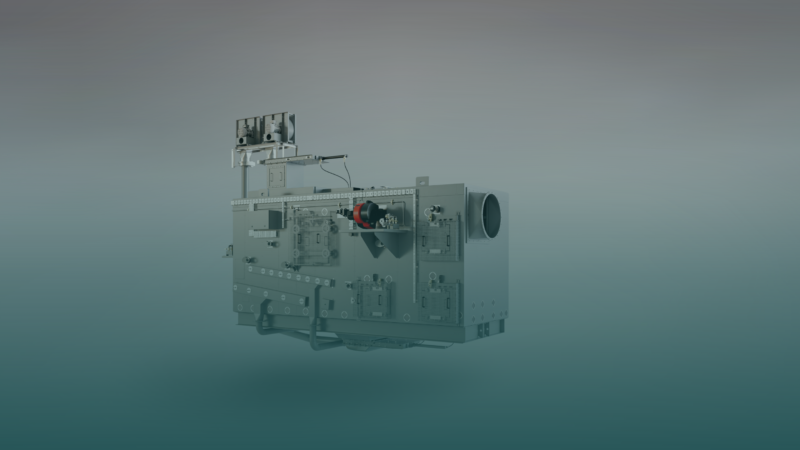
The most capable incineration platform Evac has ever brought to market.

Moving grate combustion
Advances waste through the combustion zone for a consistent, thorough burn — even as waste composition varies.
O₂-monitored control
Continuously measures oxygen levels and automatically adjusts combustion air. Less manual tuning, less visible smoke.
Fuel flexibility
Compatible with MDO, HVO renewable diesel, and biofuel blends. Ready for where marine fuel strategies are heading.
Upgrade-ready
Key improvements available as a retrofit for existing DS-series incinerators. Extend service life without replacing the whole unit.
See what sets the Evac Waste Incinerator Flex apart.
From the moving grate inside the combustion chamber to the O₂ sensor that keeps the burn in control – this is how the upgraded platform works, and why it’s built for the realities of cruise waste handling today.
Residual waste has nowhere else to go.
While every ship prioritizes recycling, all ships still generate contaminated, hazardous, and non-recyclable waste that can’t go ashore and can’t wait. Food-contaminated waste, medical waste, and materials that can’t be further processed all require reliable onboard treatment, regardless of route, port, or conditions. For cruise operators, the reliable, effective way, is incineration — and it means getting it right every time.
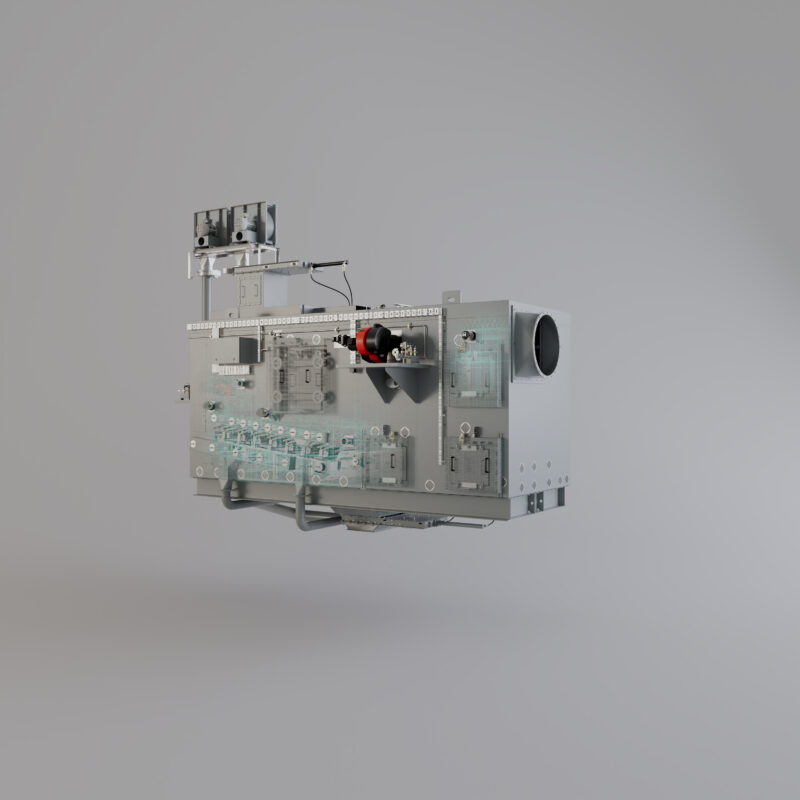
Smarter incineration means more than just burning waste.
Variable waste streams, fuel availability constraints, and crew workload pressures are daily realities on cruise vessels. The Evac Waste Incinerator Flex is designed around all three — with automation that responds to what’s happening inside the chamber, and a fuel system that doesn’t lock operators into one source.
Operational
Automatic combustion control reduces the need for manual tuning and delivers more consistent results shift after shift — regardless of what waste composition the crew is dealing with.
Environmental
HVO-compatible burners support a smaller auxiliary fuel CO₂ footprint, and the O₂ control system helps minimize visible black smoke and soot — something that matters both environmentally and visibly for cruise vessels.
Lifecycle
Key upgrades retrofit onto existing DS-series moving grate incinerators. Operators don’t need to replace the whole unit to access the new control and fuel capabilities — backed by Evac’s global service network.
Evac Waste Incinerator Flex is built for this.
Consistent combustion
The moving grate advances waste through multiple burn stages — drying, pyrolysis, and solids combustion — so the burn stays thorough even when waste quality varies.
Automatic, not manual
Where previous-generation systems required manually set and fixed air vents, the Flex adjusts combustion air automatically in real time based on live O₂ readings. The system responds — the crew doesn’t have to.
Fuel that fits your route
MDO, HVO, or biofuel blends. The Flex doesn’t require a single fuel source, which reduces operational risk and supports evolving fuel strategies without changing how the crew works day to day.
Newbuild or retrofit
Available for new cruise vessel builds and as an upgrade for DS400 through DS4000 series installations already in service.
Introducing Evac Waste Incinerator Flex
Key features
Moving Grate Combustion Process
Most onboard incinerators use a static bucket — waste goes in, sits, and burns from one position. The moving grate is different. Waste advances through the combustion zone in stages, so combustion is continuous, comprehensive, and far less dependent on waste composition.
The grate moves waste through drying, pyrolysis, and solids burning zones in sequence, supporting a complete burn and more consistent outcomes — without depending on crew intervention to compensate for variable inputs.
O₂-Monitored Combustion Control
Incomplete combustion produces visible black smoke and soot — a problem that matters operationally, visually, and in terms of crew workload. The Flex addresses this at the source.
An ABB Endura AZ25 oxygen sensor measures O₂ levels directly inside the combustion chamber in real time. The system uses this reading to automatically adjust combustion air supply — no manual vent adjustment, no guesswork. When oxygen conditions shift, the system responds.
This continuous control loop supports more complete combustion and helps minimize visible black smoke and soot in day-to-day operation.
Fuel Flexibility — HVO, Biofuel Blends & MDO
Fuel availability and fuel strategy are both changing across the cruise sector. The Flex’s burners are compatible with conventional marine diesel oil, HVO renewable diesel, and biofuel blends — so operators are not locked into a single source.
This reduces fuel-related operational risk, supports vessels operating across different regions with varying fuel supply, and provides a practical path toward lower-carbon auxiliary fuel use without requiring operational changes from the crew.
Fuel compatibility is dependent on fuel type and applicable regulatory approvals.
Key specifications
The Evac Waste Incinerator Flex is an upgrade of our proven existing moving grate incinerator platform, incorporating an in-situ oxygen sensor, dual combustion air fans with frequency controllers, and HVO-compatible burners for primary and secondary combustion air supply.
The O₂ sensor delivers direct, in-situ measurement inside the combustion chamber — eliminating the measurement drift common in extracted-sample systems. Combustion air supply is adjusted automatically and continuously in real time based on oxygen readings.
Available across the DS-series range for both new builds and retrofit conversions.
Compatible models for upgrade: DS400–600 · DS800–1400 · DS1600–2400 · DS3000–4000
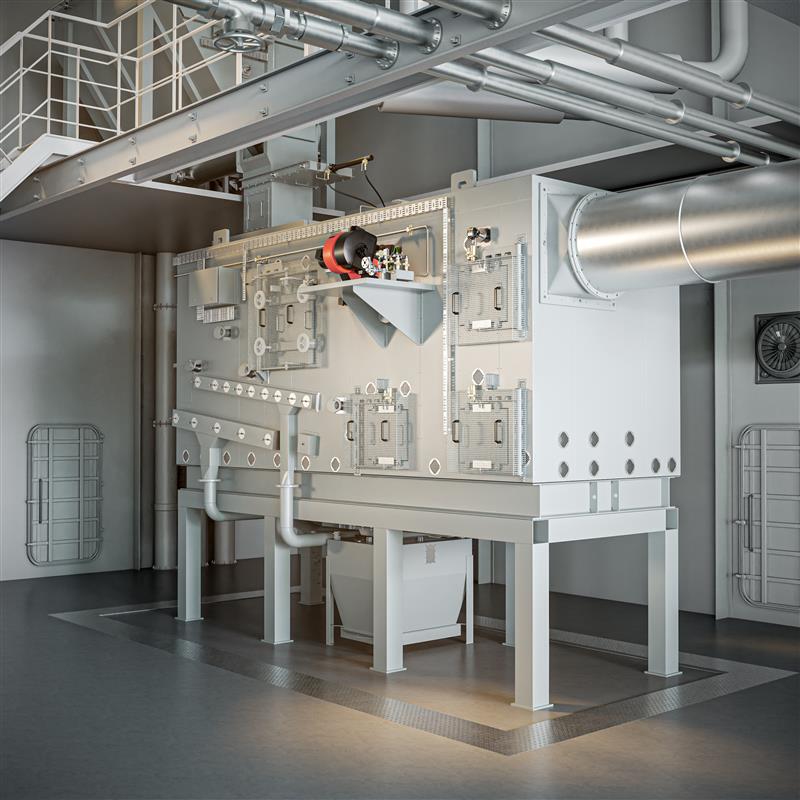
LIFECYCLE RENEWAL
Already operating an Evac DS-series incinerator?
The key improvements in the Evac Waste Incinerator Flex, including the O₂ combustion control system and HVO-compatible burners, can be delivered as upgrades to your existing installation. You don’t need to replace the whole unit to access smarter control and fuel flexibility.
Evac’s service team manages the upgrade process and provides ongoing support throughout the system’s service life.

Evac’s vacuum food waste collection system
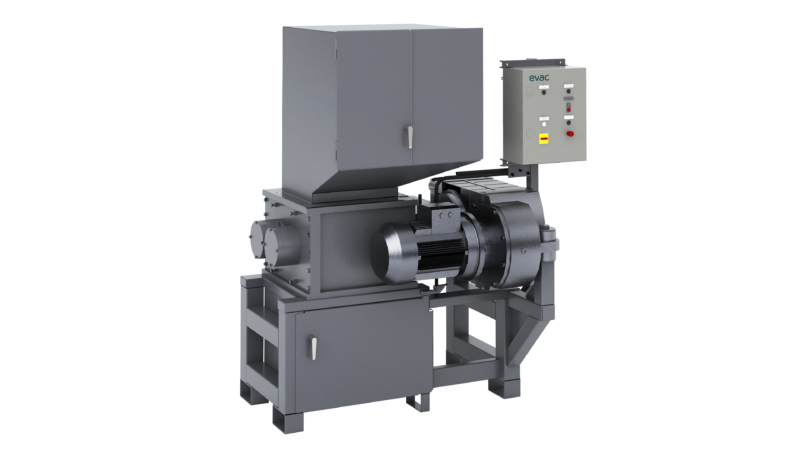
UMS-5050 heavy duty shredder
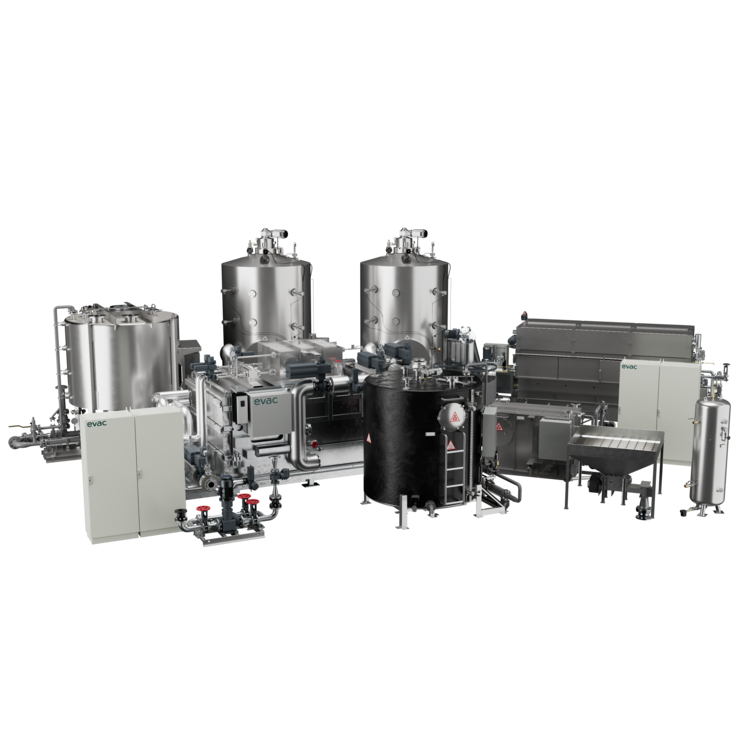
Evac HydroTreat for wet waste treatment
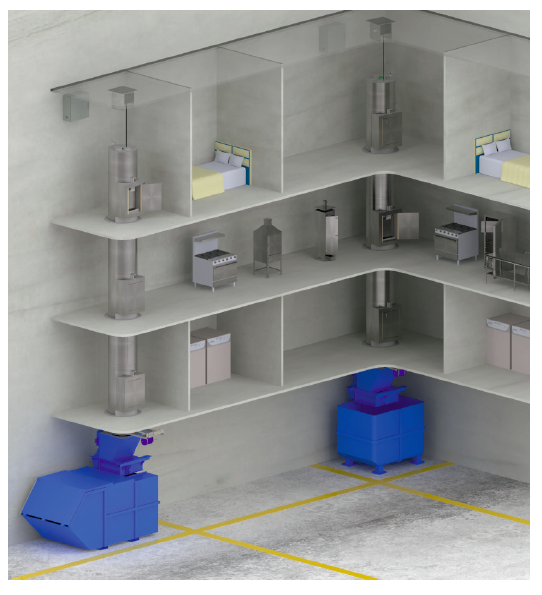
Waste Chute System for dry waste treatment
EVERYTHING YOU NEED TO KNOW
Evac Waste Incinerator Flex – questions answered.
FAQ
What waste types does the Evac Waste Incinerator Flex handle?
The Evac Waste Incinerator Flex is designed to handle residual, non-recyclable waste that cannot be stored or landed at port reception facilities. This includes food-contaminated waste that poses pathogen risks if brought ashore, bio-hazardous waste from onboard medical facilities, and materials that cannot be recycled or further stored. It is not a replacement for recycling. It handles what recycling cannot.
What fuels are compatible with the burners?
The burners are compatible with conventional marine diesel oil (MDO), HVO renewable diesel, and biofuel blends. Fuel compatibility is dependent on fuel type and applicable regulatory approvals for the operating area. The system does not require a single fuel source, which reduces operational risk for vessels operating across different regions with varying fuel availability.
Can I upgrade my existing Evac incinerator?
Yes, for vessels operating existing DS-series moving grate incinerators. Key improvements, including the O₂-monitored combustion control system and HVO-compatible burners, can be delivered as a retrofit upgrade to the following models: DS400–600, DS800–1400, DS1600–2400, and DS3000–4000. Contact Evac to assess your installation and define the right upgrade scope.
How does the O₂ combustion control system work in practice?
An oxygen sensor is inserted directly into the combustion chamber, measuring O₂ concentration in real time using an in-situ method. Based on this live reading, the system automatically adjusts the combustion air supply, increasing or reducing airflow to maintain optimal combustion conditions as waste composition changes. In the previous generation DS system, combustion air was manually set via fixed air vents and left unchanged. The Flex adjusts continuously and automatically, without requiring crew intervention. The result is more complete combustion, reduced manual tuning workload, and minimized visible black smoke and soot during operation.
What does the moving grate do differently from a bucket incinerator?
In a bucket incinerator, waste enters a single chamber, sits in one position, and burns from the bottom up. This can result in incomplete combustion, particularly as waste piles up or moisture and composition vary. The moving grate advances waste through the combustion zone in stages: drying, pyrolysis, and solids burning. Combustion is continuous and thorough regardless of what the waste stream contains. This supports a more stable, complete burn and more consistent operational outcomes shift after shift.
What does the Total Concept mean for my vessel?
The Evac Waste Incinerator Flex is one part of Evac’s integrated total concept for onboard waste management. A complete system typically combines shredding for volume reduction, controlled silo storage, and thermal treatment through the incinerator. Evac designs and dimensions these elements together, vessel by vessel. The incinerator capacity determines how much silo storage is needed, and the waste volumes determine shredder throughput. Rather than specifying components in isolation, the total concept is sized as a system to deliver reliable performance across the full waste handling process.
What lifecycle support does Evac provide?
Evac’s lifecycle services cover the full service life of the system. This includes installation and commissioning, operator training delivered on-site or in the classroom, spare parts supply through a global distribution network with logistics centers in North America, Europe, and Asia, and technical support via Evac’s global support network. Preventive maintenance and on-site repair services are available through local Evac-authorized engineers. Evac also offers site surveys and condition assessments to identify future maintenance needs and performance improvement opportunities. Service packages are available with fixed and flexible pricing options.
Why Evac is the right partner for onboard waste incineration.
PROVEN INCINERATOR KNOW-HOW
Evac’s moving grate technology has operated at sea for decades. The Flex builds on that foundation; not starting from scratch, but engineering it forward.
GLOBAL SERVICE CAPABILITY
Evac’s service network covers maintenance, parts, upgrades, and renewal, wherever your vessels operate.
INTEGRATED PORTFOLIO
We design shredding, storage, and incineration together, dimensioned to your vessel. System-level performance, not component-by-component specification.
BUILT FOR WHAT’S NEXT
HVO compatibility, O₂ automation, and retrofit options mean the Flex keeps pace with where cruise waste management is heading – without replacing what already works.
Contact Evac’s waste management team
Tell us a little about your vessel and operational needs, and our team will help you define the right configuration — new build or upgrade.