
Adaptive Reuse Plumbing: How Vacuum Systems Support Historic Building Conversions
In the United States, office vacancy reached a record 21% in early 2026, according to Moody’s. The shift to remote and hybrid work since the pandemic is a major driver. In Europe, the focus is somewhat different: sustainability and energy independence are major drivers of renovation, with the EU’s Renovation Wave strategy aiming for up to 35 million buildings to be renovated by 2030.
In both regions, vacant buildings – often historic structures – are being considered for adaptive reuse, mixed-use development, and improvements in energy efficiency and sustainability.
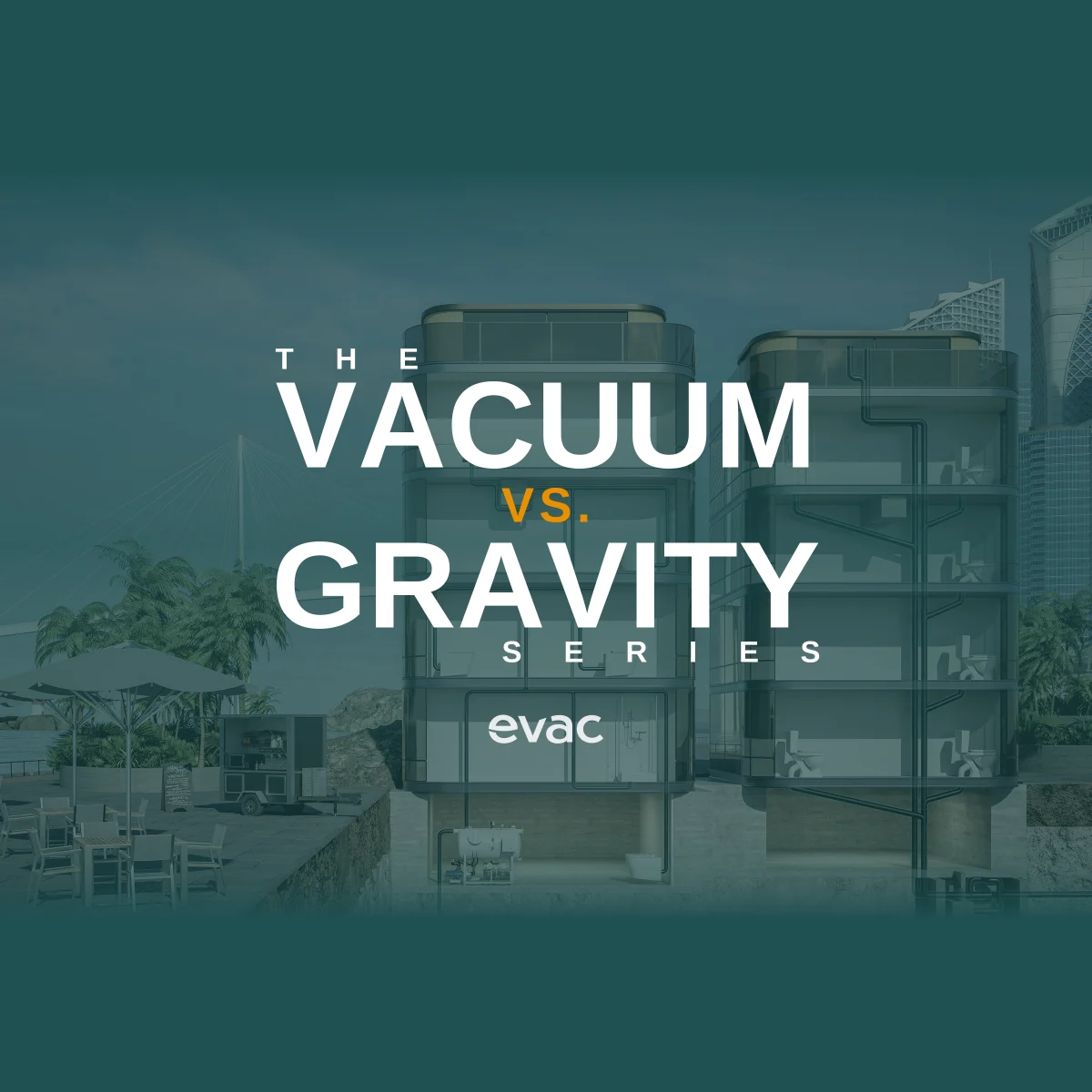
At a Glance
- Office vacancy in the US and the EU’s renovation goals are turning many historic buildings into adaptive reuse projects.
- Vacuum plumbing uses negative pressure, so small pipes can run overhead through ceiling voids instead of needing floor trenches and gravity falls.
- That helps protect historic floors, foundations and listed slabs, and reduces disturbance of hazardous materials such as asbestos.
- At London’s Grade II-listed Chancery Rosewood, vacuum drainage let bathrooms follow the guest experience without cutting through protected structure.
However, adaptive reuse projects often present architects and engineers with recurring challenges, particularly when it comes to plumbing systems.
For historic renovations, vacuum drainage systems offer several advantages over conventional gravity-based systems, including:
- Greater design flexibility
- Reliable performance
- Simplified renovations
- Water savings and improved hygiene
- End-user advantages, including faster, cleaner restrooms, easier maintenance, and improved hygiene
Although traditional gravity-based plumbing systems are common in older buildings, their size and layout requirements can severely restrict adaptive reuse projects. Vacuum drainage systems can be the next evolution of plumbing design that can simplify commercial renovations while supporting more flexible layouts and improved building performance.
Gravity Drainage vs. Vacuum Drainage
Gravity Drainage Systems – The traditional gravity drainage system uses gravity to move wastewater and waste down pipes to a municipal main or a lower sewage site.
Vacuum Drainage Systems – A vacuum drainage system utilizes negative pressure to move waste and wastewater through a closed network of pipes. Unlike gravity-based systems, they can move waste around obstacles, up slopes and even vertically.
Vacuum drainage in this article means sanitary drainage from toilets and other fixtures, not siphonic roof drainage for rainwater, which is a different technology.
Can you add restrooms to a historic building without trenching?
Often, yes. Because vacuum piping does not rely on gravity falls, new restrooms can be connected through ceiling voids instead of trenches in the floor.
Historic buildings often limit the extent to which existing floors, foundations, and other structural elements can be altered. Vacuum plumbing systems can reduce the need for invasive construction while supporting modern building requirements.
Key benefits include:
- Little or no floor trenching
- Protection of historic flooring, tilework, and foundations
- Reduced need to disturb areas containing hazardous materials, such as asbestos
- Less invasive construction, which can help minimize associated carbon emissions
- No requirement for gravity-based pipe slopes
- Significant water savings
Chancery Rosewood Hotel in London
Premise: London’s former U.S. Embassy at Grosvenor Square, a landmark building designed by Eero Saarinen, was transformed into the Chancery Rosewood Hotel. The Grade II-listed building underwent a major remodel into a luxury hotel. The renovation required a careful balance between preserving the building’s original fabric and delivering the comfort, quiet operation, and water efficiency expected of a contemporary luxury hotel.
Challenge: Reconfigure the guest rooms with modern bathrooms while avoiding unnecessary intervention in the building’s historic and structural elements.
Solution: A traditional gravity drainage system would have dictated where bathrooms could sit, how many risers were needed and how much concrete had to be cut to achieve falls. Vacuum technology offered a different approach.
Instead of depending upon conventional vertical stacks and gravity-driven slopes, the system routed small-bore piping horizontally through ceiling voids, with minimal risers leading to a basement vacuum plant. The result was a quiet, efficient sanitary system designed around the guest experience rather than the existing stack locations, and heritage fabric was left intact. Commissioning was completed floor by floor.
This flexibility let bathrooms be placed for guest value rather than stack alignment, with no destructive cutting of listed slabs. The remodel used 192 Evac Optima 5S vacuum toilets, about 559 vacuum interface units and five Evac N°30 HQE collection units. The toilets use about 1.2 liters per flush.
The Chancery Rosewood Hotel was not a one-off project. For many commercial construction, historic reuse and mixed-use renovation projects, vacuum drainage can offer significant design flexibility, sustainability benefits and economic advantages.
Why vacuum plumbing worked for this adaptive reuse project
In a traditional adaptive reuse project utilizing a gravity-based drainage system, gravity plumbing dictates where bathrooms are situated, the number of risers, and the amount of concrete needed to be cut to achieve falls. In heritage fabric, every penetration triggers conservation procedures, latent-condition discovery, noise, dust, vibration, cost, and risk multiplied by each floor.
Planning is also more complicated. Risers cut into sellable square footage and require awkward room modules. Below-sewer spaces add expense, and long drainage runs amplify acoustic problems.
Vacuum plumbing mitigates many of those obstacles. Waste and wastewater use negative pressure rather than gravity falls, so mains can run longer distances at a high level in small-diameter pipes, routing around obstacles.
The benefits to the design team included letting the guest experience guide the design. Suites and amenities were optimized for floor space, corners, and views, while service routes were consistent without the detours caused by stacks. On the side of historic preservation, there was no destructive cutting of listed slabs, which meant fewer approvals, fewer surprises, and minimal damage to the original fabric.
To learn more about Evac’s line of total vacuum solutions, contact us today!
Tags
Recommended reading
Subscribe to our newsletter for more insightful topics.
Contact Evac Built Environment team
Planning a new build, renovation or conversion? Tell us a little about your project, and our Built Environment team will show you how vacuum plumbing can help you meet your design, space and sustainability goals.